

































Your Career Type
  1. 1

    Know your options: the 16 career types

  2. 2

    Pick the career type that's best for you

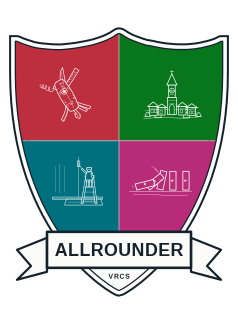
    Your career so farThe Allrounder

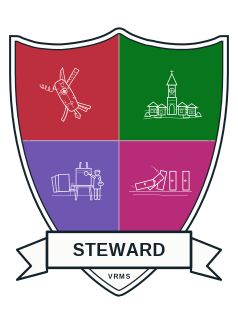
    Your best fitThe StewardVRMS

    Very different roles, in one world, taken one after another, with a drive for mastery.

  3. 3

    Get good at it

    • Learning agility
    • Contextual intelligence
    • Analogical reasoning
    • Deliberate practice
    • Political acumen
    • Knowing when to quit

Jobs last years. Careers last decades.
Choose yours well.

Make better decisions, when they matter most

  • Which job offer to accept

    Understanding how jobs fit together on the time scale of a whole career allows you to be more strategic.

  • Who to pick as a mentor

    It's better to learn from people who've lived the type of life that fits you than from people who hold the same role.

  • Whether to start a side hustle

    Some people are energized by doing something on the side. Others are distracted and stressed.

  • How to fix a sense of restlessness

    If you don't understand the source of your unease, you will destroy things you value, in pursuit of things you don't really want.

  • Whether to start your own company

    There may be easier ways to get what you actually want.

  • Select the skills to develop

    There's not enough time to get good at all life skills. So pick the ones that will be most useful to achieve your big picture goals.

  • Whether to pursue advanced learning, like an MBA or PhD

    Some people are better suited for the pursuit of mastery, while others prefer breadth.

  • How to explain what you do

    Every working life can be explained with different narratives. Pick the one that moves you towards your goals.

  • Where to live

    Some of us are made to travel the world. Others are much happier in the same neighborhood.

  • How to switch to a new sector or industry

    Moving into a new work environment can kill momentum and permanently set you back.

  • What to ask from your boss

    Don't just be a cog in your boss's strategy, also make your boss one in yours.

Know your options: the 16 career types

A career is more than a series of jobs.

Most of us don't really think about our career as a connected multi-decade project. Instead, we often just consider the pros and cons of our current job and how we want the next one to be different: more pay, a leadership position, a shorter commute, more freedom, and so on.

The problem is that we only teach ourselves and our kids this standard, old school, linear way of treating a career as a series of jobs. But there are many other ways to structure your (working) life. To get them all into view, we need to ask the right questions.

These questions sort every career into 16 types, organized into four families.

The Specialists

One kind of work, in similar places

The Locals

Different kinds of work, in similar places

The Voyagers

One kind of work, in different places

The Generalists

Different kinds of work, in different places

Which of these types is best for you?

The test shows you the type of career that is the best fit for you.

Why use career types at all?

Recognize and learn from similarities and differences between careers Career types organize the thousands of ways a career can be structured into a smaller set, built around the most important differences and similarities. That makes it easier to understand the benefits, costs and tensions of different career structures, and how choices reinforce or offset each other.

Learn from people who've had similar careers Types help you find people whose careers offer relevant lessons. You can learn from their decisions, anticipate difficulties, and avoid mistakes. After all, it's easier to learn from other people's mistakes.

Build a shared language Naming patterns makes them easier to discuss, compare, and question. A shared vocabulary helps us move from career advice towards career education.

How careers differ The sixteen types, side by side

Pick the career type that's best for you

Some careers fit you better than others.

You will be happier and perform better if your career suits your personality and comes naturally to you. Of course, the opposite is also true: going against your true desires and abilities causes long-term stress and unhappiness.

When you follow the wrong career type

  • Stress and uneaseYou keep going against your nature, and it wears you down.
  • Starting overEach move or combination starts you near zero again.
  • DetoursYou chase the chances that suit someone else's career.

When you have the right one

  • HappinessYou go with your nature, and your career gives you energy.
  • MomentumEach move or combination builds on the last.
  • OpportunityYou grab the chances made for your kind of career.
What the research says

The research shows that we are happier and perform better if our work matches our interests, needs, and abilities. And that these interests and abilities are quite stable during your life. And while this research was about people's jobs, not careers, the results are insightful for a career as a whole:

  1. Across 172 studies, people whose job suited their needs and abilities were more satisfied with their job.

    Kristof-Brown, Zimmerman and Johnson (2005), Personnel Psychology, 58, 281-342
  2. Two different metastudies, looking at a combined 134 research projects, found that people whose interests fit their work tended to perform better and stay longer.

    Nye, Su, Rounds and Drasgow (2012), Perspectives on Psychological Science, 7, 384-403; Van Iddekinge, Roth, Putka and Lanivich (2011), Journal of Applied Psychology, 96, 1167-1194
  3. Across 152 studies, personality traits are found to be long-lasting: people keep their place relative to others over the years, more so with age. So if you were better than most at dealing with ambiguity at 30, you're likely to still be better than most at 50.

    Roberts and DelVecchio (2000), Psychological Bulletin, 126, 3-25

What your result shows

The scan compares what you want and what you are good at with each of the sixteen career types, aspect by aspect. It also compares your best fit with your career so far, to spot any tensions between what you've been doing and what you should be doing.

Discover your career type

About 9 minutes. Free. No spam.

The Steward's page, in four screensAn example

The top of the Steward's page: its name, the line that sums it up, and its shield
The Steward
The four letters of VRMS, Varied, Rooted, Mastery and Serial, each on its own colour panel with its drawing
What VRMS stands for
Cards of real Stewards: Graham Beale, Luiza Trajano and Burt Rutan, each with the moves of their career
Real Stewards
The skills table: six skills, each marked against the letters it serves
The skills a Steward career asks for

See the whole Steward page

Twelve traits map onto the 16 types

The scan reads twelve traits, two or three behind each aspect: what you want and what you are good at.

The five aspects and their traits
  • Role breadth
    What you want
    • Novelty seeking
    What you are good at
    • Cognitive flexibility
    • Tolerance for ambiguity
  • Environment breadth
    What you want
    • Network-diversity preference
    What you are good at
    • Contextual code-switching
    • Self-concept breadth
  • Depth pursuit
    What you want
    • Mastery goals
    What you are good at
    • Sustained effort
  • Concurrency
    What you want
    • Polychronic attitude
    What you are good at
    • Working memory
  • Origin
    What you want
    • Autonomous motivation
    What you are good at
    • Internal locus of control

Which of the 16 career types is best for you?

This 9-minute test analyzes all 12 of these traits to determine the type of career that best fits you.

Discover your career type

About 9 minutes. Free. No spam.

Get good at it

Career advice is not enough. We need career education.

Every career type has its trade-offs: risks worth minimizing, benefits worth amplifying. But how do you get good at this?

When it comes to careers, most of what we get is career advice. A short video on social media might tell you to be adaptable. But that is completely useless if you have no idea what it actually means to be adaptable. Or how to learn it.

Instead, we need to move to career education.

The adviceBe adaptable.

The real questionHow do you recognize which skills to develop, so that it's easier to take on a new role or find a job in a different industry?

The Academy sets out to teach the skills that make you more effective at managing your career.

About the Academy

I'm not reinventing the wheel

Changing jobs often is not new. Americans born between 1957 and 1964 held 12.9 jobs on average between the ages of 18 and 58. And all that time, both scientists and popular thinkers have been developing insights we can use. For example, Donald Super's Career Development Theory stems from 1953.

The Academy will bring you the best of that work, from old thinkers and new.

Sources: US Bureau of Labor Statistics, National Longitudinal Survey of Youth 1979, August 2025; Donald E. Super, “A theory of vocational development”, American Psychologist 8, 1953.

Some skills are disguised as traits

Many of the most useful skills are hiding in plain sight, disguised as traits. For example, we believe some people are more creative, luckier, better networkers, bad at cutting their losses, good with numbers, quick learners, and on and on.

We act as if these are as fixed as our eye color or shoe size. But they're not. They are not static abilities that you're either born with or without. They are skills that can be developed.

It's best compared with learning to play a sport or instrument. You can only reach your personal best by working at it. All of us can, with proper training and effort, become at least competent at almost every sport. And, yes, talent still plays a big part: most of us will never play a match at Wimbledon or get a scholarship at Juilliard.

But you don't need to be the best. You just need to be competent at the trait-like skills that have the most impact on your happiness and effectiveness.

Be the first to know when the Academy opens

Sign up for the newsletter. Free. Leave any time.

Rik Visser

Why I'm building this

I'm Rik Visser. So far I've produced a feature film, traded options, built a software company and run a co-working company. (That makes me a generalist, specifically an Adapter.)
My career typeThe Adapter

In 2022 the head of the Entrepreneurship master's programme at the University of Amsterdam asked me to give career advice to his students. The idea was for me to be the rebellious alternative to the other speakers, who were on traditional consulting and corporate career paths.

But I saw an opportunity to do more when I wrote that first presentation. Merely giving advice wasn't going to cut it. Every attempt at advice quickly collapsed into platitudes and superficiality that are of no use to a 21-year-old.

So, instead, I decided to focus on educating them on two aspects of a generalist career: holistic income and how to be a hyphen-specialist. The contents of that talk remain valuable and will make it to the Academy at some point, but the main takeaway for me was the sheer enthusiasm with which my 20-minute lecture was received.

Neither the students nor the professionals attending had ever thought about these things. Somehow, these are topics that nobody ever discusses or teaches.

Since that first talk in 2022, I have had the privilege of returning every year to teach a new cohort. Those talks form the basis of what you find here. I hope you find it useful and interesting.
Frequently asked questions

How long does it take?

About nine minutes: 64 short statements about your career so far and about how you like to work.

Is it free?

Yes. The scan, your result and all sixteen type pages are completely free. If the Academy becomes a big thing I'll probably charge for that.

What do I get?

Your best-fit career type, the type your career has followed so far, and where the two differ. Plus the full page for your type: what it gives, what it costs, and the skills it asks for. Mostly, a fresh angle on yourself and your career. I think the best way is to just invest the nine minutes and see for yourself.

Is it scientific?

Sort of. Each of the twelve traits is based on published research. (Which I actually read!) However, my way of bringing it together in the scan is new. The typology organizing careers into types is all original work. To judge for yourself, take a look at the Go deeper pages for a more in-depth explanation of how this came to be.

Is this just another personality test?

No. It contains one: it measures traits the same way tests like MBTI or the Big Five do. But it looks at completely different traits, some of which might be completely new to you. The goals are also very different. A personality test helps you categorize yourself. This test and the career types aren't about pigeonholing you, they're about helping you identify the type of career that suits you. And show you how to get better at it. So while it starts with your personality, what I focus on is your career, not you.

What happens to my answers?

Your answers and your email address are kept on a server in the EU, to show your result and to improve the scan. You are only signed up for the newsletter if you tick the box, and you can download or delete everything from your profile.

How we handle your data

Which career type is best for you?

Know your options. Pick the career type that's best for you. Get good at it.

Discover your career type

About 9 minutes. Free. No spam.